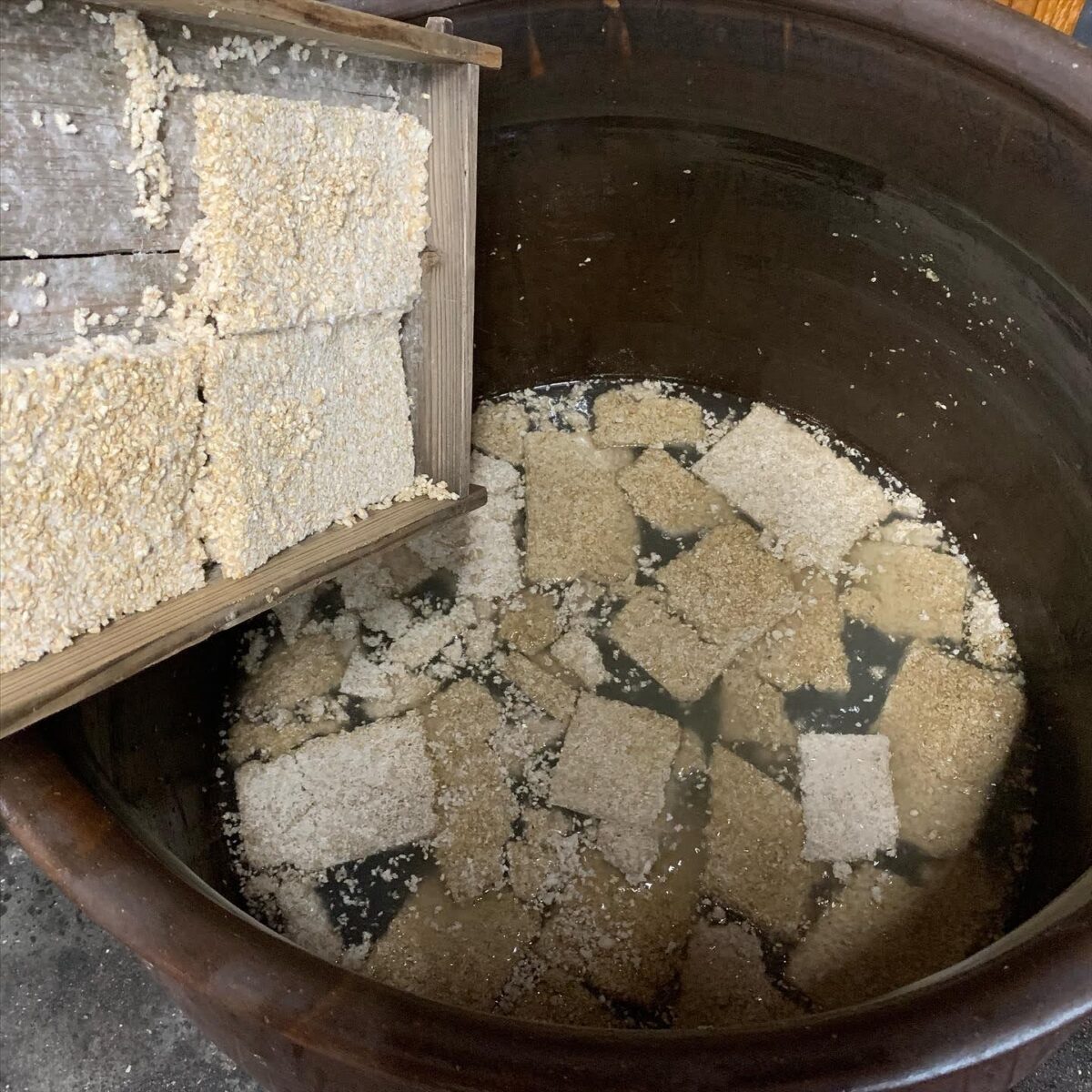
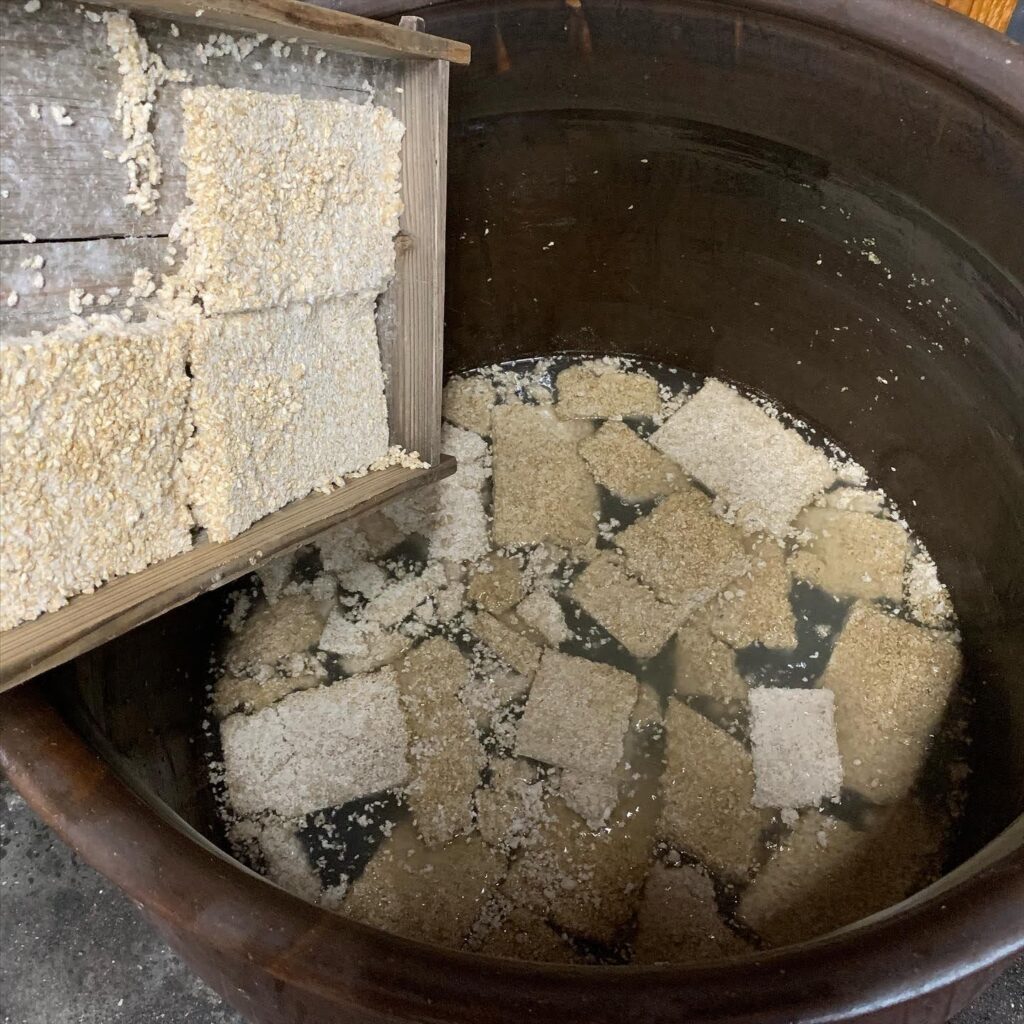
In our vinegar brewing process,
we have always used a large amount of koji and steamed rice when making the moromi (fermentation mash).
This has been one of our core principles,
as it leads to vinegar with deep flavor and richness.
However, recently we noticed a small change.
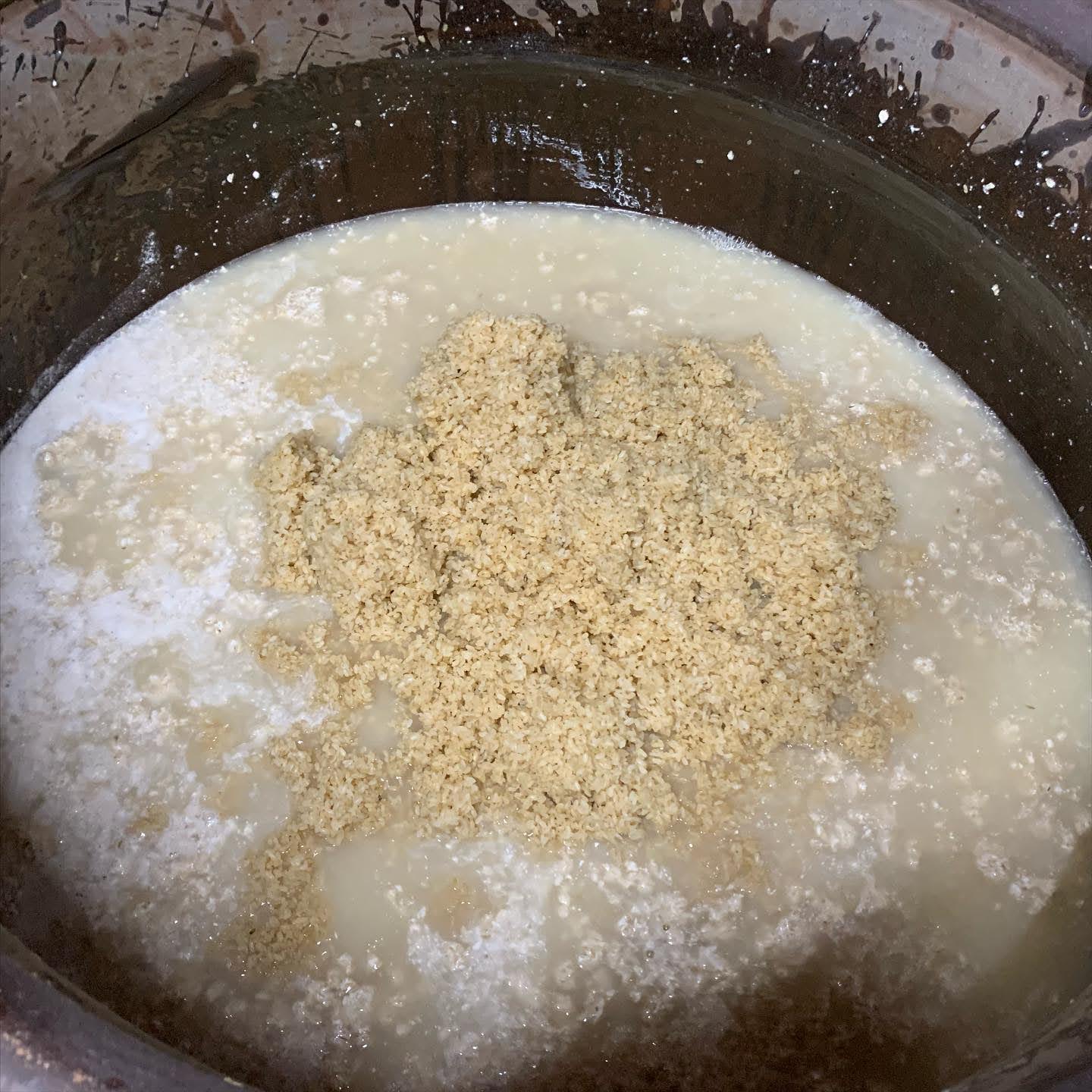
The vinegar has become slightly cloudy and developed a subtle viscosity.
What We Think Is Happening
We believe this is related to
a small amount of residual sugar remaining in the moromi.
Acetic acid bacteria convert alcohol into vinegar,
but under certain conditions,
some strains produce polysaccharides such as cellulose or glucan.
This is what creates the slightly thick texture.
Note: These substances are generally harmless.
Similar to Nata de Coco
Here’s something interesting.
This “viscous substance”
is created through the same mechanism as nata de coco.
Nata de coco is made when acetic acid bacteria convert sugar into cellulose.
In other words,
it is fiber produced by microorganisms during fermentation.
What we are seeing in our vinegar
is essentially the same phenomenon on a smaller scale.
Again, this is not harmful,
but for vinegar, a clean and smooth texture is preferred.
Why It Happens
The process can be summarized like this:
1. Sugar is not fully converted into alcohol
2. Alcohol concentration remains slightly low
3. Acid production rises slowly
4. Conditions favor certain bacteria
Conditions That Trigger It
- Residual sugar
- Slow acidification
- Overly slow acetic fermentation
How We Approach Improvement
- Minimize residual sugar
- Raise acidity quickly
- Stabilize fermentation
What We Are Testing Now
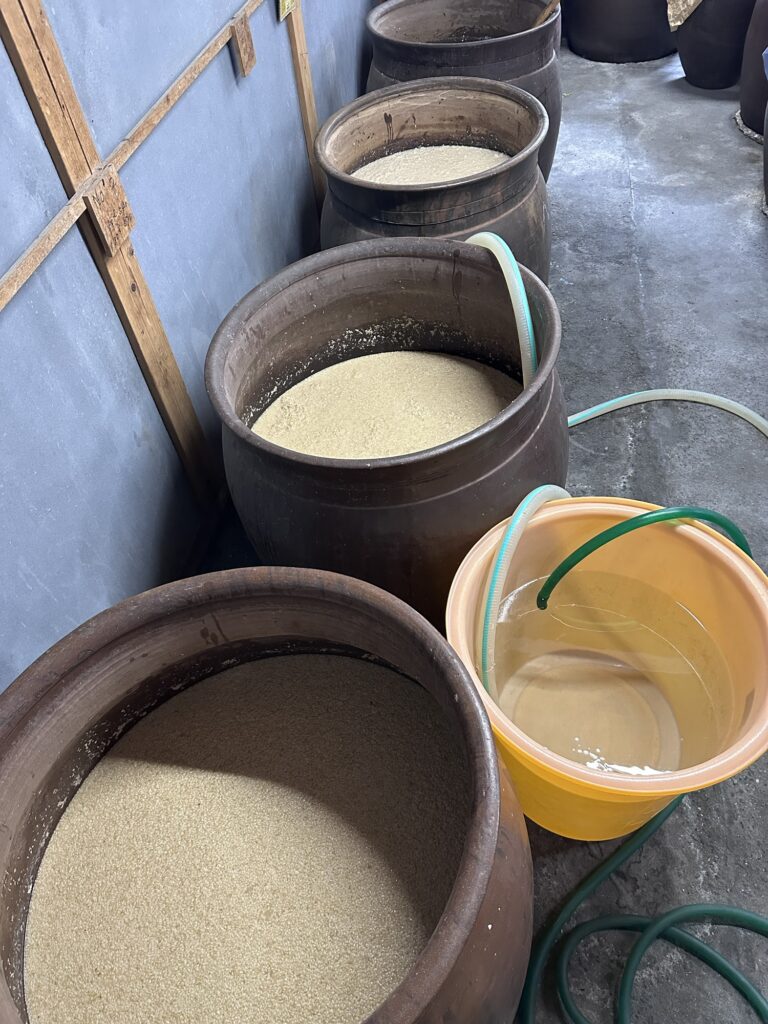
One adjustment we are testing is
changing the timing of adding water.
Previously, we added water after alcohol fermentation,
right before starting acetic fermentation.
This time,
we add part of the water during alcohol fermentation.
Our Goal
- Support yeast activity
- Fully convert sugar into alcohol
- Complete fermentation properly
This results in a lower alcohol concentration,
but a higher total alcohol yield.
And most importantly,
it avoids unstable intermediate conditions.
Working with Microorganisms
We reuse our acetic acid bacteria,
so we do not sterilize everything.
Fermentation is not about eliminating microbes,
but about balancing them.
The key elements are:
- Sugar
- Alcohol
- Acidity
About the Seed Vinegar
When the seed vinegar becomes viscous,
we lightly heat it before use.
However, residual sugar may still remain,
so this is something we will continue to evaluate.
Summary
This change is not a defect,
but rather a sign of slight imbalance in fermentation.
The vinegar itself is still good,
but we aim to consistently achieve a clean, smooth finish.
What’s Next
We will share the results of this batch
in 1–2 months.
Most changes in fermentation are not failures, but natural variations caused by conditions.
Understanding and controlling these differences is what makes fermentation fascinating.


